
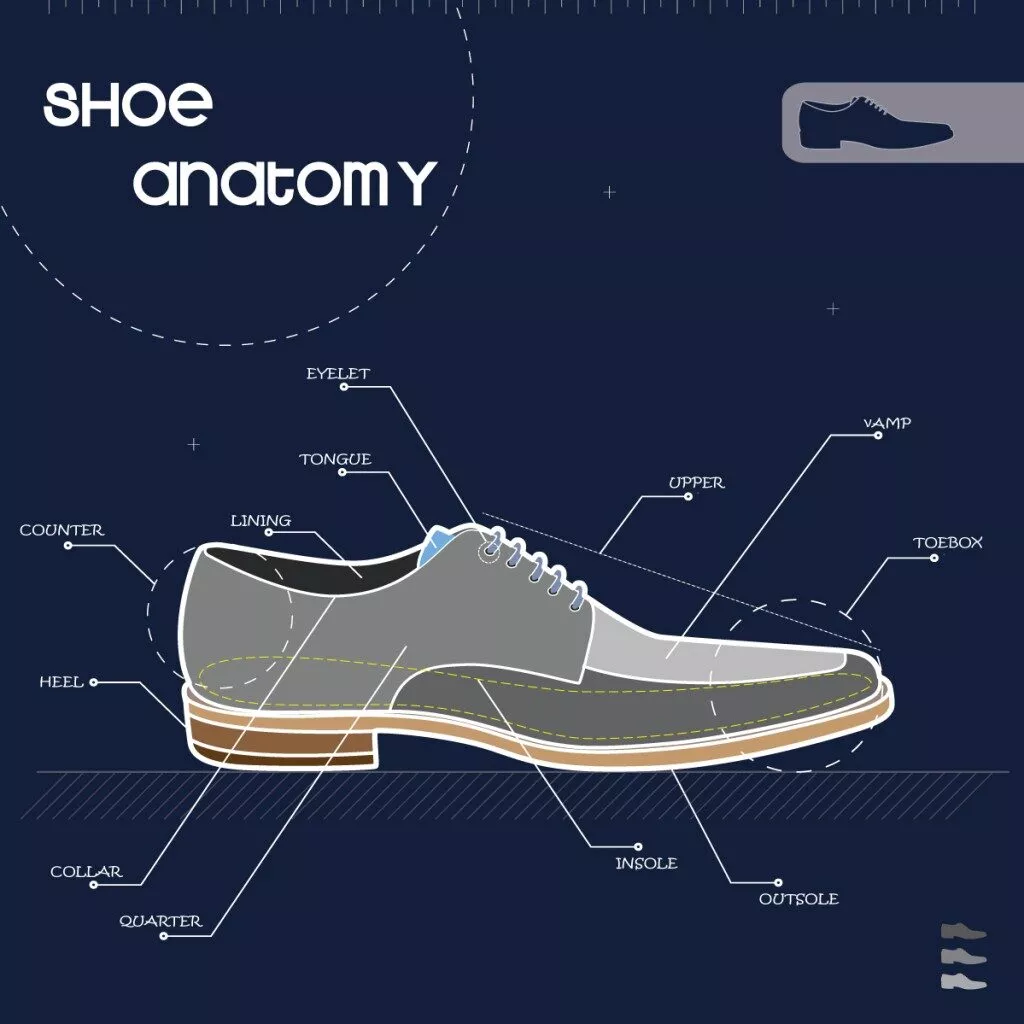
Whether you’re a footwear enthusiast, a budding designer, or a business owner in the shoe industry, understanding shoe anatomy is essential. At Expose Trendze, we believe that knowing the parts of a shoe not only helps you appreciate its design but also enables you to make informed decisions about quality, comfort, and functionality. Let’s break down the key components of a shoe using the anatomy from the attached image.
1. Upper
The upper is the top part of the shoe that covers the foot. It includes several components:
- Vamp: The front part of the upper that covers the toes and forefoot.
- Quarter: The rear part of the upper that wraps around the heel.
- Tongue: The strip of material under the laces that protects the top of the foot.
- Eyelet: The holes through which laces are threaded to secure the shoe.
- Collar: The padded area around the opening of the shoe that provides comfort around the ankle.
2. Toe Box
The toe box is the front part of the shoe that houses the toes. It’s crucial for comfort and fit, as a cramped toe box can cause discomfort and long-term foot issues.
3. Counter
The counter is the stiff material at the back of the shoe that provides structure and support to the heel. It helps maintain the shoe’s shape and prevents it from collapsing.
4. Lining
The lining is the inner material of the shoe that comes in direct contact with the foot. It enhances comfort, wicks moisture, and adds durability to the shoe.
5. Insole
The insole is the interior bottom part of the shoe that cushions the foot. It can be removable or fixed and plays a significant role in providing comfort and support.
6. Outsole
The outsole is the bottom part of the shoe that comes in contact with the ground. It’s made from durable materials like rubber or synthetic compounds to provide traction and withstand wear and tear.
7. Heel
The heel is the raised part of the outsole under the rearfoot. It provides elevation, support, and stability, especially in formal or high-heeled shoes.
Why Shoe Anatomy Matters
Understanding shoe anatomy is vital for anyone in the footwear industry. It helps you:
- Evaluate Quality: Identify well-constructed shoes by examining each component.
- Improve Design: Create footwear that balances style, comfort, and functionality.
- Enhance Customer Experience: Educate customers about the features that make your shoes stand out.
At Expose Trendze, we use this knowledge to craft footwear that combines innovation, comfort, and style. Whether you’re designing, manufacturing, or selling shoes, mastering shoe anatomy is the first step toward success.